Medication Dispensing Records: What Malaysian Law Requires | Medinex
Medication dispensing records requirements

Every time a GP clinic dispenses medication to a patient, there is a legal obligation attached. The nature of that obligation depends on the classification of the medication being dispensed. Most clinic owners are broadly aware of this, but few have reviewed exactly what their dispensing records must contain and how long they must be kept.
A surprise inspection from the Pharmacy Enforcement Division (BPF) or a complaint to MOH can expose gaps that were never meant to be there. This article explains the requirements under Malaysian law in practical terms.
The Legal Framework for Medication Dispensing
The primary legislation governing medication dispensing in Malaysia is the Poisons Act 1952 (and its subsidiary regulations, including the Poisons Regulations 1952 and the Controlled Substances Regulations). The Act classifies medications into schedules (referred to as Schedules or Groups) that determine who can prescribe and dispense them, and what records must be maintained.
For GP clinics, the most relevant classifications are:
Group | Examples | GP dispensing? | Record required? |
|---|---|---|---|
Group A (Poisons) | Morphine, Pethidine | Restricted; controlled substance register required | Yes, detailed register |
Group B (Restricted medicines) | Certain antibiotics, benzodiazepines | Yes, with restrictions | Yes |
Group C (Prescription only) | Most common prescription medications | Yes, with prescription | Prescription record |
Group D (Pharmacy medicines) | OTC-class but pharmacy only | Yes | Invoice/stock record |
Group G (Controlled medicines) | Tramadol, codeine-containing compounds | Yes, with strict controls | Yes, controlled register |
What the Controlled Substance Register Must Contain
For Group A and Group G medications, the Poisons Act requires a formal controlled substance register (also called the Register of Poisons). This is a bound register (or approved digital equivalent) that records every transaction involving these medications.
Each entry must contain:
Date of transaction
Name and address of the supplier (for purchases) or patient (for dispensing)
Name and quantity of the substance
Purpose of the supply (treatment, dispensing against prescription, etc.)
Reference to the prescription authorising the dispensing
Running balance (quantity in stock after each transaction)
Signature of the dispensing person
The controlled substance register must be:
Maintained in sequence (no pages removed, no entries crossed out in a way that obscures the original)
Available for inspection at any time by authorised officers
Retained for at least 2 years from the date of the last entry
What Common GP Compliance Gaps Look Like
Based on the pattern of MOH inspection findings at private GP clinics, the most common dispensing record compliance gaps are:
1. Controlled register not up to date
Transactions recorded in batches at the end of the day or week rather than at the time of dispensing. The Poisons Act requires contemporaneous recording.
2. Missing patient details
Some clinics record only the patient name without the IC number or address. A complete patient identifier is required for Group A and G substances.
3. Prescription not archived
The prescription that authorised the dispensing must be kept on file and cross-referenced to the register entry. Many clinics dispense the prescription to the patient without retaining a copy.
4. Running balance not maintained
The register should show a running stock balance after every transaction. If the balance does not tally with actual stock, it is a red flag in any inspection.
5. Expired stock not properly written off
When expired controlled substances are disposed of, the disposal must be recorded in the register with date, quantity disposed, method of disposal, and the signature of two witnesses (typically the dispensing person and a witness). Disposal without proper documentation is a compliance gap.
What a Digital Dispensing Record Must Include for Non-Controlled Medications
For Group B, C, and D medications (which represent the vast majority of a GP clinic’s dispensing volume), the record requirements are less prescriptive but still legally binding.
For each dispensed medication, your records should capture:
Patient identification (name, NRIC)
Medication name (generic and brand if applicable)
Strength and formulation (e.g., Amlodipine 5mg tablets)
Quantity dispensed (e.g., 30 tablets)
Batch number and expiry date (essential for recall tracking)
Dosage instructions as given to the patient
Date of dispensing
Prescribing doctor (name and MMC number)
Dispensing person (if different from the prescribing doctor)
This information serves dual purposes: compliance with the Poisons Act, and clinical safety (batch tracking enables you to identify and recall affected patients if a medication lot is recalled by NPRA).
MOH Inspection: What Inspectors Look For
MOH inspections at private GP clinics (conducted by Kementerian Kesihatan Malaysia enforcement officers) typically focus on:
Is the clinic’s operating licence (Borang B) current?
Is the dispensing area adequately separated from the consultation area?
Are controlled substances stored in a locked, secure container?
Is the controlled substance register maintained correctly and up to date?
Are expired medications segregated and not available for dispensing?
Are dispensed medications labelled correctly (patient name, dose instructions, expiry, clinic name)?
Are prescription records retained?
A clinic that fails on points 3, 4, or 5 is at immediate risk of enforcement action. A clinic that fails on points 6 or 7 typically receives a warning and corrective period.
Digital Records: Are They Compliant?
The Poisons Act and its regulations were written when paper records were the only option. MOH has not yet issued definitive guidance on the acceptance of fully digital dispensing records for all categories. The current practical standard:
Controlled registers (Group A and G): A physical bound register is still the safest approach. Some clinics maintain a digital log in addition to the physical register. Until MOH issues updated guidelines, do not rely solely on a digital record for controlled substances.
Non-controlled dispensing records (Group B, C, D): Digital records are generally accepted in practice, provided they are accurate, searchable, and accessible during inspection.
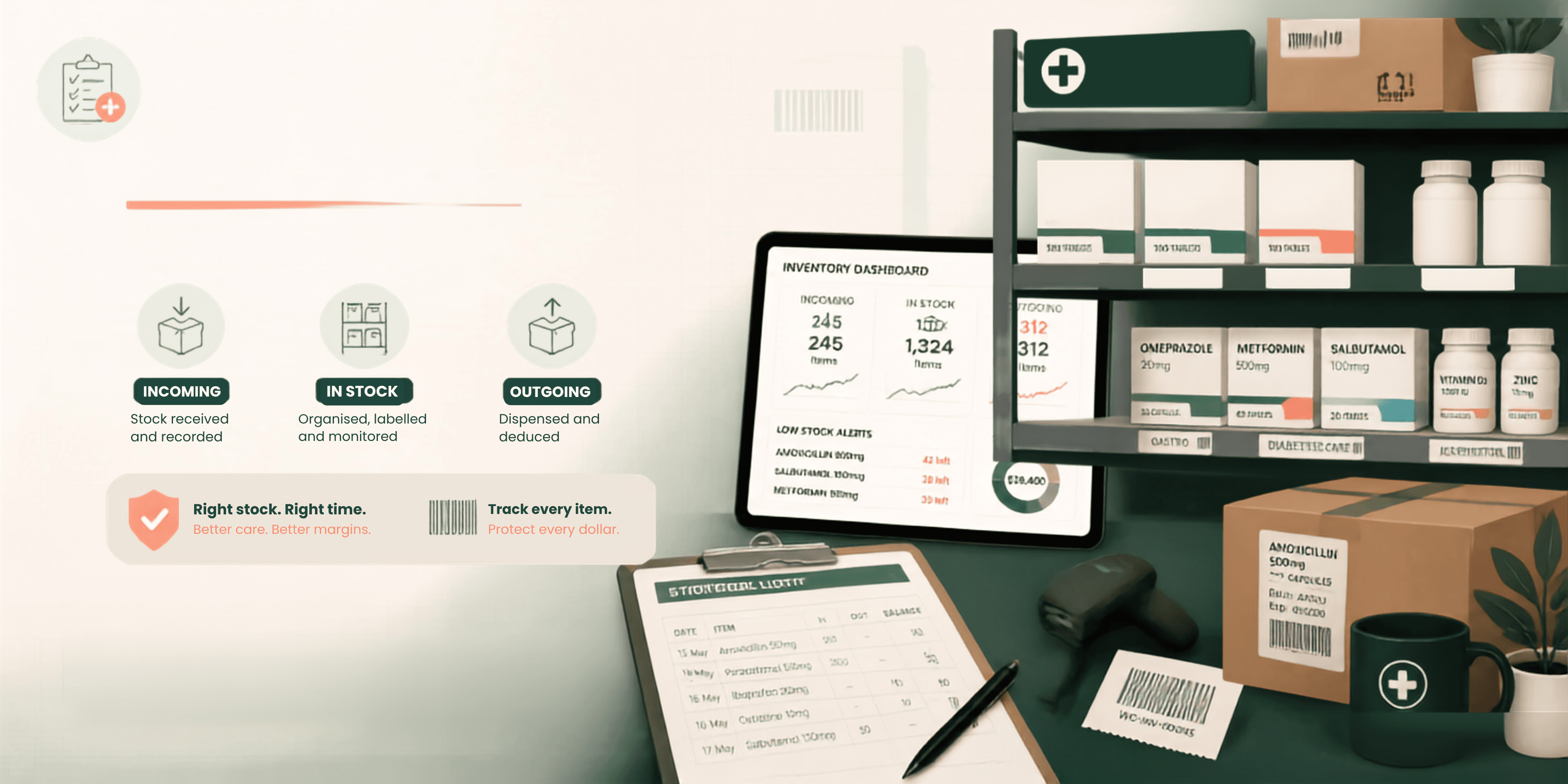
→ Medinex records full dispensing details including batch number, expiry date, and quantity at point of dispense. Book a demo to see how dispensing records work.